Wednesday, February 18, 2009

In the Eye of the Economic Storm


Read this article written in 2001 about Japan’s “lost decade”. Turns out their “lost decade” was not so lost. And neither will ours. What will be lost is trips to Walmart in our SUV’s to fill up our McMansions with junk made by slave labor in China. What will be lost is unchecked mega-corporate power and greed. What will be lost is our collective fat lazy ass. We will be better off and happier for it.


Here are my predictions for the near future. Shocks around the world are yet to come, like the collapse of China’s capitalism-authoritarianism anachronism. American’s will have less money. Our jobs will be less secure, lower paying, more creative and more skilled. We will have more free time and we will have better health, information, entertainment, and education. We will have less energy and natural resources but we will use them smarter. Our quality of life will continue to improve.

Tuesday, February 3, 2009

25 things about me.


I joined the Navy mainly to fight the Cold War, which thank God, ended much sooner and less violently than I expected.

After serving on a submarine, I appreciate a place with a good view.

I am good at navigating. I almost never get lost, even when I try to. I feel comfortable and enjoy walking (or riding my ATV) around forest land that is new to me.

I prefer non-desk jobs.

I have little experience with evil or death. Both still shock and surprise me when I encounter either.

I like to play the board game Diplomacy, a game of negotiations and deceit, which is in a genre all its own. I also like Chess. Gambling holds no interest for me.

I think it is better to loose and learn than to win but that might be a rationalization.

I did not learn to read until I was eight. I am terrible at spelling. My reading is slow and with good compression. I can read just as fast when the letters in the middle of the words are mixed up.

I am not patient. That’s why I like computers. There is nothing that can be done with a computer that could not done just as well some other way, but using a computer is faster.

Some people would call me a nerd but that’s not how I see myself. Or, put another way, if I am a nerd, then nerds rule! Is that a nerdish thing to write? Is that a nerdish question to ask?

I am afraid of spiders. This fear has been somewhat overcome by the necessity, when renovating houses, of crawling into cramped, dark spaces with big ugly spiders. Yeack.

I think Reagan was a great president. I supported Obama. I voted for Ross Perot. I think government spending on non-essential programs does not help. I think health care should be nationalized as opposed to making the existing private system “universal”. I think anyone who wants to should be allowed to become a US citizen.

My first impression of Europe from the air (Luxemburg) was that it looked like a cemetery. My first impression of Asia from the air (Tokyo) was that is looked like a printed circuit board. My first impression of Latin America (Costa Rica) was terror as the plane made a roller coaster landing through the mountains.

One of the most dangerous things I ever did was to go on a human rights mission to Colombia.

All four of my grandparents emigrated from Ireland. My maternal grandfather, who I barely knew, was an officer in the Irish army during the Irish revolution. After the war, he deserted the army to go to the US and marry my grandmother. My paternal grandfather, who I barely knew, had 13 siblings, 7 of whom died of tuberculosis.

All my male relatives were alcoholics.

My mom graduated from the University of Chicago when she was 18.

My wife is my best friend and the best woman I ever met. My sons are smart, engaging, healthy, happy and good looking. I am a lucky guy.

If I had known how hard it is to raise kids, I would have started when I was younger.

One of my main goals in life is to set a good example for my sons.

I think there is a lot going on in the universe that we humans do not understand.

I believe I have free will.

I miss my dog, Pokey.

I make lists of things to do then I do them. I do not understand how so many people live without making lists.

My shopping list currently has two items: Tabasco sauce and Band-Aids.

Monday, January 26, 2009

Baboon Metaphysics


Read this book, Baboon Metaphysics.

It’s a detailed study of baboon social behavior in the wild. Baboons live in large groups of up to 100 individuals. They are constantly vocalizing and each baboon can recognize the voice of each individual in the group. Baboons know all the time how each member of the group is feeling. They have a strict social hierarchy that is distinct for males and females. Male dominance is based on strength and changes over time; female dominance is based on birth family. Males recognize and protect their own offspring.


What I found most fascinating about this book is not just how complex baboon social structure is but how lacking they are in self-awareness. Baboons so not empathize. They are unable to comprehend others feeling differently from their own feelings. This can lead to what seems like very strange behavior. A mother will swim across a river unaware that the infant clinging to her belly can not breathe. Calls of lost baboons will be answered by other lost baboons but not by baboons who are not lost.


There is something very unique about human self-awareness and empathy. Its location in the brain is being discovered. It develops rapidly about age 4. It does not exist in baboons.

Thursday, January 22, 2009

The Problem with Evolution

I think the theory of evolution, ie natural selection, has some major problems. And it has nothing to do with Christianity. Here are some of my objections to the theory of evolution.


Time for multi-celled organisms to evolve: The Earth is roughly 4 billion years old. Bacteria evolved about 3.5 billion years ago. Multi-celled organisms evolved 500 million years ago. How could it take 3 billion years for bacteria to evolve into multi-celled organisms?

Mitochondria DNA: Mitochondria are structures in the cells of every multi-celled organism. They have DNA. There must be situations where the selection for the mitochondria DNA is different than the nucleus DNA yet in no organism has the entire mitochondria DNA been transferred to the nucleus. In the theory of natural selection, is it the nucleus or the mitochondria that is selected?

Programmed cell death:
In multi-celled organisms, cells have a very complex process for suicide. How could this have evolved according to the theory of natural selection?


I don’t have the answers to any of these questions but I think they are the questions we should be asking.

It’s the Alphabet

One of the greatest demographic shifts in world history was the virtually elimination of Native Americas by Western Europeans. It’s difficult to admit that our fore bearers took the land we now inhabit by genocide. But the horror of it is not unique to history. What is unique is the scale. The most popular theory now is that plagues brought from Europe decimated the Native Americans and there is much evidence to support this. Another theory proposed in Guns, Germs and Steel, is that domestic animals gave the Europeans a great advantage. Cows and horses increase productivity in Europe to the point that large numbers of people could escape subsistence farming and pursue technological advancement. One theory I have not heard discussed much is writing. Or more specifically writing with an alphabet, or even more specially, writing with vowels.

Writing developed independently a few times in world history. But writing with a phonetic alphabet only developed once, in the Middle East and writing with vowels only developed once, in Greece. There are two great advantages to this system of writing; it is relatively easy to learn, and it can be used to communicate abstract ideas.

Technological achievement is useless unless you have a way to pass it on.

We Europeans may have lucked out with the development of the alphabet but what we did with it was up to us. The alphabet enabled the development of powerful technology but it also gave us the ability to communicate the ethics of what we did with it. Unlike the plague theory, if the alphabet enabled the Europeans to wipe out the Native Americans, then the responsibility is all ours.

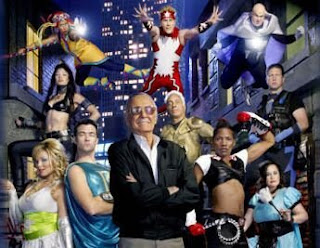
Who Wants to be a Superhero?

“What crime fighting superpower would you choose to have?”: a classic question all kids ask each other. Super strength? Flying? Spider dexterity? Invisibility? That one, invisibility, always struck me as lame. So what if you’re invisible, as soon as you do anything, you’re not invisible anymore.


My answer to this hypothetical question was mind reading. It may have come from reading Isaac Asimov’s Foundation Trilogy. In those books, a mutant human can not only read minds, he can control them. That’s going a bit too far for me. The idea of having a superpower becomes uninteresting if you become omnipotent. That’s why Superman has Kryptonite. But just reading minds, now that’s fascinating. You could expose criminals before they commit crimes.


But now that I am a bit older and a bit more experienced, I realize, as is typical, that I had this all backward. What would be really cool is not reading other people’s minds but letting other people read my mind. And it’s not a super power, it’s something everyone could do.


Stay with me for a moment on this.


I am not saying that your freewheeling mind is out there for everyone to knock about. You could choose to make some of your thoughts available for someone else to see directly. And they could do the same. It would be like talking; only more direct, clearer, and, here’s the kicker, much more difficult to deceive.


Since most people are good, evil can only exist in the shadows. Evil deceives. Evil creates chaos to hide in. In a world where people read each other’s thoughts directly, evil would have a hard time hiding. Anyone who did not share his thoughts would stick out. Everyone else would investigate this person.


Such a world is more that a bit frightening. I identify with my thoughts as a fundamental part of my identity. If I throw them out there, are they still mine or do they belong to everyone. And if my thoughts belong to others, what am I left with that is mine.